
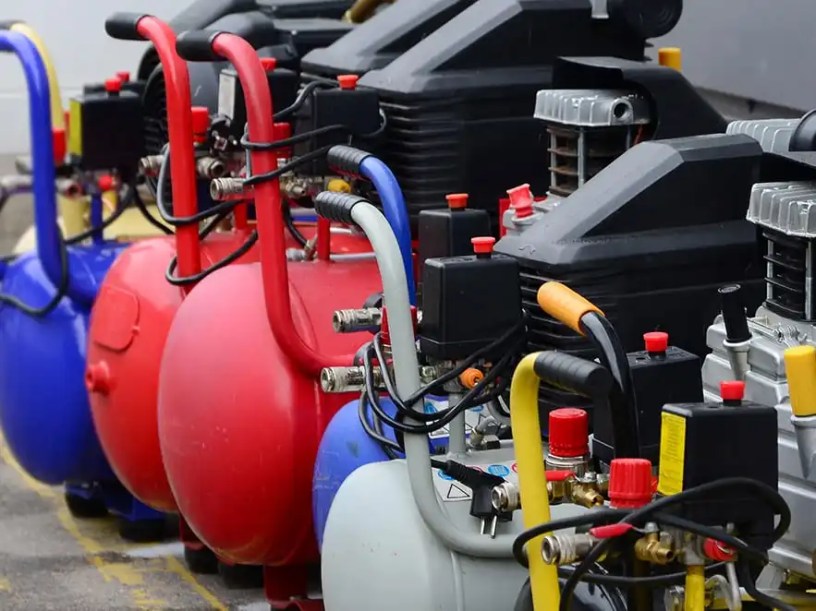
Most companies think about compressed air exactly twice, once when they buy the machine, and once when it stops and takes production with it. In between it runs unwatched in a back room, which is precisely where the money goes. Anyone specifying an air compressor Singapore operations depend on is committing to a decade of electricity consumption, service intervals and statutory duties, none of which appear on the quotation being compared against a rival one.
The Cost That Never Appears on an Invoice
Finance teams see a capital item and a maintenance line. What they do not see is that the machine may consume its own purchase price in electricity within the first year of continuous duty. Once that ratio is understood, the sensible comparison changes shape. Two quotations separated by a few thousand dollars are effectively identical; two machines separated by several percentage points of specific power consumption are not remotely comparable, whatever the price difference suggests.
Measure Before You Buy
A short data-logging exercise on the existing system settles arguments that specification meetings cannot. It shows the real duty cycle, the genuine peak, how long that peak lasts, and how much time the plant sits idle but pressurised. Suppliers quoting without that information are quoting against assumptions, usually generous ones. A week of logging costs very little and routinely reveals that the replacement being planned is a size larger than anything the site has ever actually drawn.
Leaks Are the Default State
Every compressed air system leaks, and an unmanaged one leaks badly. Quick-release couplings, worn hoses, filter drains left cracked open and corroded joints add up quietly. Because escaping air makes no mess, the loss attracts no attention until someone measures it. An ultrasonic survey, tagging and a scheduled repair round will typically recover a large fraction of that waste for the cost of a few fittings, and it is the cheapest efficiency work available to any facility.
Pressure Creep and the Temptation to Turn It Up
When a tool underperforms, the reflex is to raise system pressure. It works, and it is expensive, every additional bar costs roughly six to seven per cent more energy across everything the compressor produces, and it increases the leak rate at the same time. The underlying fault is usually an undersized pipe run, a blocked filter or a badly placed take-off point. Fixing the restriction and returning the setting to where it belongs is almost always the cheaper answer.
Where Air Quality Is Not Negotiable
Air quality requirements should be set by the application rather than by habit. General workshop duty tolerates ordinary filtration. Direct contact with product, sensitive instrumentation, and the sample handling carried out in medical labs demand far tighter limits on moisture, particulate and oil content, with documentation to prove it. Specifying that grade across an entire site when only one line needs it is a costly way of feeling safe, and point-of-use treatment usually serves better.
Buy, Rent or Contract
Ownership is not the only model. Short-term hire covers seasonal peaks, shutdowns and construction work without tying up capital. Longer rental suits tenants whose lease horizon is shorter than the equipment life. Some operations buy air by the cubic metre under a contract where the supplier owns and maintains the plant and is paid on delivered volume, which shifts efficiency risk onto the party best placed to manage it. Each model prices risk differently, so the comparison should be made over the same term.
Statutory Duties and Safety
Compressed air is stored energy, and the obligations follow accordingly. Air receivers are pressure vessels subject to periodic examination by an authorised examiner, with records that must be produced on request. Safety valves need testing, and pressure equipment must be registered where the regulations require it. Beyond compliance, the practical hazards deserve respect: whipping hoses, air used to blow down clothing, and receivers isolated for maintenance without being fully depressurised.
Maintenance as a Scheduled Cost
Service intervals for a screw compressor are predictable, which means the budget can be too. Air and oil filters, separator elements, lubricant changes, valve checks and belt or coupling inspection all run to hours-based schedules. Deferring them saves nothing, because a collapsed separator or degraded oil takes the airend with it, and an airend rebuild costs a substantial share of a new machine. Condensate drains and dryers belong on the same schedule and are the parts most often forgotten.
Choosing Who Supplies It
Judge the supplier by the same standards applied to any other technical purchase, including the supplier laboratory equipment is sourced through: authorised distribution rather than parallel imports, parts held in country, engineers trained on the specific range, and a documented response time rather than a verbal assurance. A supplier who declines to log your demand before quoting is telling you something useful about how the relationship will run after the invoice is paid.
A Short Checklist Before Committing
Log demand, size to what the log shows, and settle air quality line by line rather than site-wide. Compare tenders on energy consumed per unit of air delivered. Confirm the receiver examination regime and who is responsible for it. Establish where spares sit and how quickly an engineer attends. Handled in that order, the decision stops being a purchase and becomes what it always was, an operating cost that can be controlled.

